Overhead Rail-Mounted Pouring Manipulator: The Key to Stable, Safe Casting Production
In modern foundry operations, many teams face persistent workflow challenges that hinder safety, efficiency, and productivity. These common pain points include:
- Traditional floor-mounted casting manipulators occupy valuable ground space, leading to crowded work areas and restricted movement.
- Manual or ground-based handling often causes equipment shaking, molten metal splashing, and ongoing safety risks for operators.
- Multi-station production requires frequent repositioning of heavy machinery, wasting time, disrupting production rhythms, and reducing hourly output.
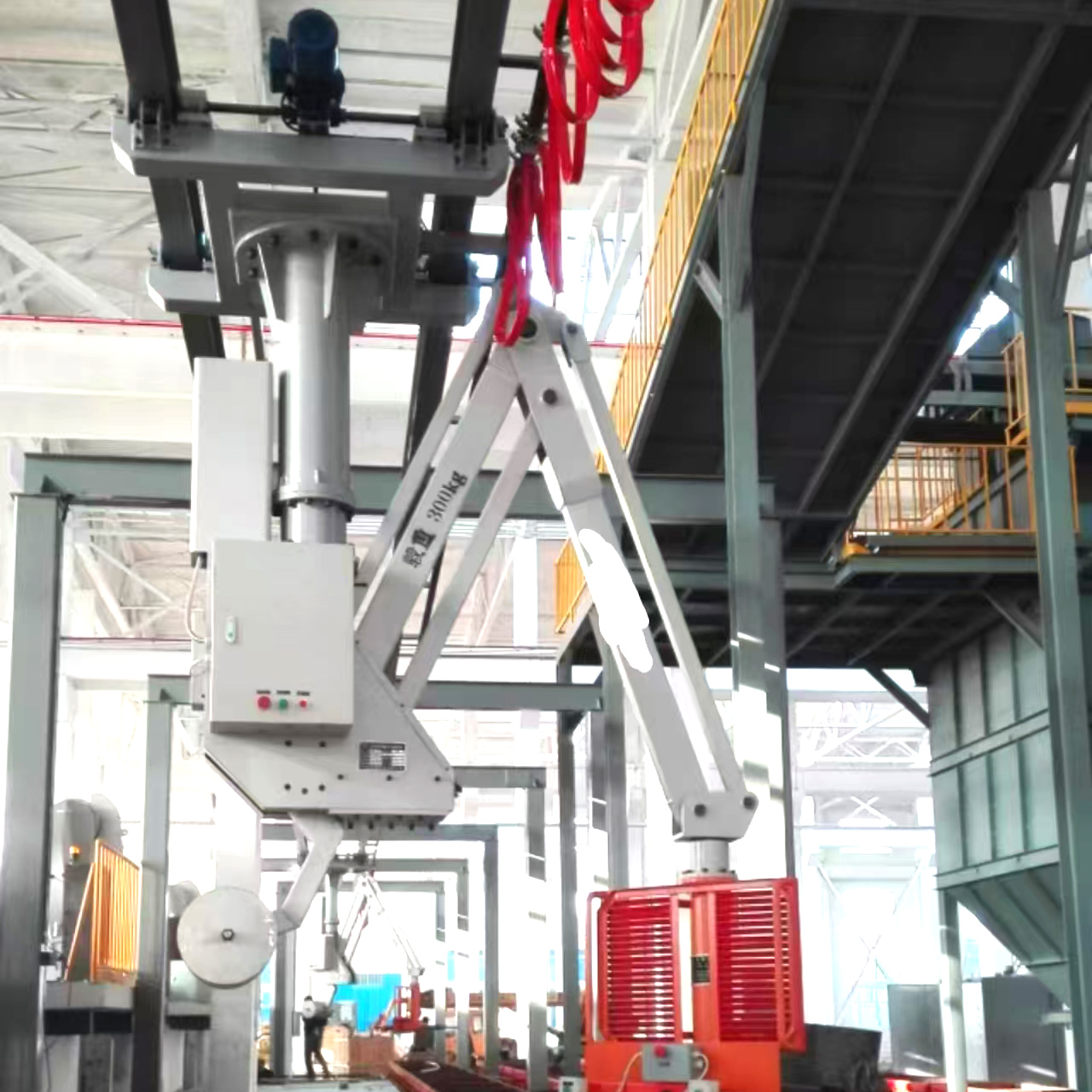
The overhead rail-mounted pouring manipulator solves these issues head-on by elevating pouring operations above the production floor. This innovative design offers three core advantages:
Frees up valuable floor space for more flexible workshop layouts
Delivers smooth, stable overhead movement to minimize errors
Supports continuous multi-station pouring along a fixed track
What Is an Overhead Rail-Mounted Pouring Manipulator?
An overhead rail-mounted pouring manipulator is a heavy-duty industrial manipulator specifically designed for controlled molten metal pouring. Unlike floor-mounted units, it is installed entirely on overhead support rails, keeping it off the workshop floor.
Core Working Logic
- Rail-guided movement: Travels linearly or longitudinally along a fixed overhead track
- Precise control: Enables stable ladle lifting, lowering, and angle adjustment (critical for consistent pouring)
- Operation modes: Available in semi-automatic or manual control to match your team’s workflow
- Medium/large casting parts production
- Multi-station workshop layouts
- Sand casting foundries
- Iron, steel, and alloy foundries
Structural Advantages
The overhead rail design delivers practical benefits that directly improve daily foundry performance. Each advantage addresses key pain points of traditional pouring equipment:
No floor footprint: Maximizes usable workshop space and eliminates ground congestion, allowing for more flexible equipment and station placement.
Rail-guided path: Ensures consistent, predictable travel with no deviation or collision risks—critical for safe, efficient multi-station operation.
Overhead suspension: Keeps the ladle steady during movement, significantly reducing molten metal sloshing and splashing.
Longitudinal travel: Covers multiple molds or stations in a single continuous run, eliminating the need for frequent repositioning.
Strong load capacity: Compatible with medium and large pouring ladles, with a load range of 100kg to 1000kg, easily supporting heavy-duty casting tasks without compromising stability. This eliminates the need for multiple small pouring machines, streamlining production equipment.
Low vibration design: The overhead suspension structure and rail-guided movement minimize equipment vibration during pouring. This stability ensures consistent molten metal flow, reducing casting defects caused by uneven pouring and improving overall product quality.
Key Benefits for Foundry Production
Keeps operators at a safe distance from high-temperature molten metal, reducing the risk of burns and heat-related injuries.
Eliminates ground-level congestion and collision risks, as the manipulator operates overhead without interfering with floor traffic or other equipment.
Stable suspension and rail-guided movement reduce molten metal splashing, minimizing fire hazards and equipment damage.
Integrated safety features (e.g., emergency stop, overload protection) ensure reliable operation even in high-pressure production environments.
Smooth, low-vibration movement ensures consistent pouring speed and angle, eliminating turbulence that causes common casting defects (e.g., porosity, cold shut, uneven thickness).
Precise angle control allows for accurate molten metal distribution, ensuring each mold is filled evenly and completely.
Reproducible movement patterns guarantee consistent quality across batches, reducing scrap rates and improving yield.
Continuous longitudinal travel along the rail covers multiple stations in one run, eliminating the need for frequent repositioning of heavy equipment—saving time and reducing workflow interruptions.
Semi-automatic control options reduce operator workload, allowing one operator to manage multiple pouring stations and increasing overall productivity.
Faster cycle times for pouring operations, as the manipulator moves seamlessly between stations without delays.
Ideal for narrow or space-constrained foundries, as it leverages overhead space that is often underutilized.
Compatible with existing production line layouts, requiring minimal modifications to your workshop.
Selectable Configurations
To meet the unique needs of different foundries, the overhead rail-mounted pouring manipulator offers flexible configuration options.
Rail type
Single rail (for simple, linear layouts) or dual rail (for enhanced stability in heavy-duty or long-travel applications).
Travel length
Fully customizable based on your workshop size, station spacing, and production range—no need to compromise on coverage.
Load capacity
Available from 100kg to 1000kg, with options for higher capacities to support heavy-duty pouring needs.
Control mode
Manual control (for hands-on operation) or semi-automatic control (for streamlined, consistent performance).
Customization Service
Every foundry has unique layout and production needs—one-size-fits-all equipment often fails to deliver maximum value. We offer comprehensive customization services to ensure your overhead rail-mounted pouring manipulator integrates seamlessly into your workflow:
Custom rail length & layout: Designed to match your workshop dimensions and station spacing, ensuring full coverage of all pouring areas.
Custom load & ladle matching: Tailored to your specific ladle size and load capacity requirements, ensuring optimal performance.
Semi-automatic function customization: Adjust control features to align with your team’s workflow and operator preferences.
On-site layout evaluation support: Our team provides professional evaluation to recommend the best configuration for your space.
2D/3D layout design: Detailed design drawings to help you visualize the equipment’s placement and integration into your workshop.