Get a Quote
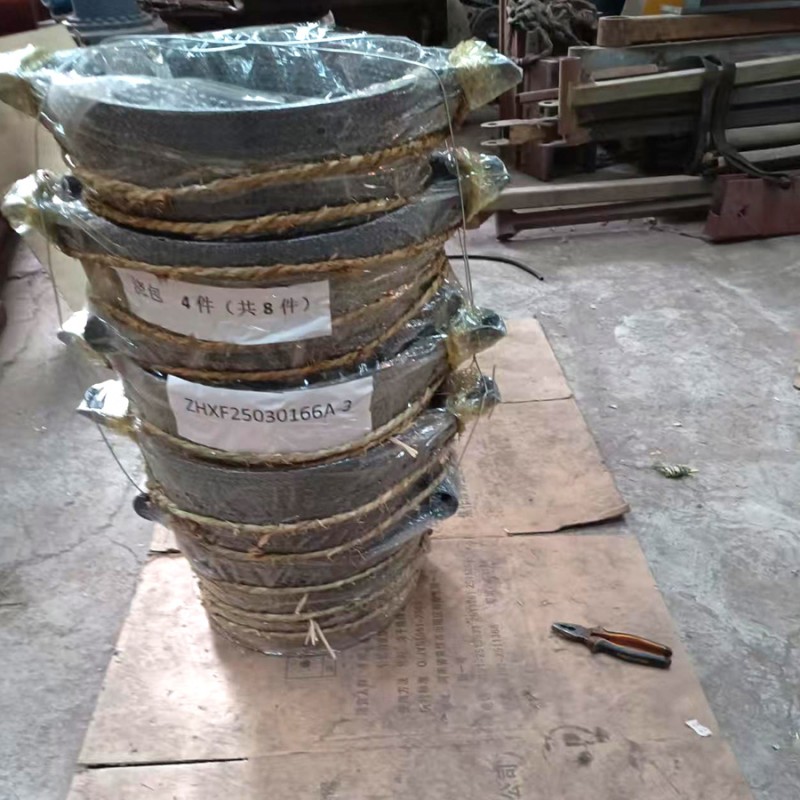
Precision-controlled pouring to reduce slag inclusions and casting defects
Heavy-duty refractory lining for extended service life under extreme heat
Manual and electric configurations available to match your foundry’s workflow
What Is a Foundry Ladle?
A foundry ladle is a semi-automatic pouring solution specially built for sand casting production workflows. It serves as the core intermediate process equipment responsible for stably holding, transferring, and pouring high-temperature molten metal from industrial furnaces to sand molds. It bridges the smelting and molding procedures, ensuring the continuity and stability of the entire sand casting process.
Reasonable deployment of a professional pouring ladle optimizes overall foundry production efficiency, process stability and operational safety, bringing tangible practical value to casting workshops:
Stable molten metal temperature control
The integrated structural design and professional refractory lining effectively reduce heat dissipation during molten metal transfer, avoiding excessive temperature drop that causes casting porosity, cold shut and other quality defects, and maintains stable metal fluidity for molding.
Consistent pouring process
Realizes controllable and repeatable molten metal output, avoids manual pouring errors and flow fluctuation, ensures uniform filling speed of each mold, and greatly improves the consistency of finished castings.
Improve on-site operation safety
Adopts mechanical semi-automatic pouring instead of direct manual high-temperature operation, isolates operators from high-temperature molten metal splashing risks, and reduces potential safety hazards in the casting area.
Wide material compatibility
Adaptable to multiple conventional casting alloys including cast iron, carbon steel, alloy steel and aluminum alloy, meeting the diversified production needs of general industrial sand casting workshops.
According to different control methods, structural designs and process application scenarios, common industrial ladles for sand casting are classified into four mainstream types, covering low-volume customized production to high-volume assembly line operation:
Designed for small and medium-sized foundry workshops and intermittent batch production. It adopts manual mechanical adjustment to realize tilting pouring, with flexible operation and low daily maintenance cost. The unique teapot flow channel structure can effectively isolate floating slag on the molten metal surface, which is suitable for conventional iron and steel casting processes with ordinary quality requirements.
Semi-automatic electric controlled pouring equipment, upgraded on the basis of manual models. The electric drive system realizes stable tilting and quantitative pouring, eliminates unstable factors caused by manual operation. It is applicable to long-term, high-frequency and high-volume continuous casting production lines, effectively reducing operator labor intensity and improving production rhythm.
High-precision pouring equipment oriented to high-quality casting production. It adopts bottom drainage pouring mode, which completely avoids surface slag and oxide from entering the mold. It is widely used in high-standard steel castings, precision mechanical parts and other scenarios that require extremely low impurity content in castings.
Customized functional ladles for special casting processes and metal materials. Including lightweight structural ladles for aluminum alloy pouring, dual-purpose ladles applicable to both iron and steel smelting and pouring, and professional wire-feeding desulfurization ladles supporting molten metal pretreatment processes. All customized structures are optimized according to actual workshop processes to match special production requirements.
Structural Design & Functional Characteristics
High-Strength Refractory Lining Construction
Mature Tilting & Semi-Automatic Control Mechanism
Multi-Dimensional Safety Protection Structure
Optimized Spout & Pouring Channel Geometry
Selecting a suitable molten iron ladle according to actual production conditions is the key to improving casting quality and production efficiency.
Match Ladle Type with Casting Metal & Process
For conventional iron and steel sand casting, teapot ladles and bottom-pour ladles are the most versatile options, balancing production cost and casting quality. For aluminum alloy casting, priority should be given to lightweight low-turbulence customized ladles to adapt to the fluid characteristics of aluminum liquid. For ductile iron production, it is necessary to select a process-specific ladle that supports in-bag nodularizing and inoculant addition to meet the pretreatment process requirements of ductile iron.
Match Control Mode with Production Volume
For small-batch, diversified job-shop customized production, manual ladles are more suitable, with flexible operation, strong adaptability and low daily maintenance cost. For standardized assembly lines with fixed products and high repetitive output, electric semi-automatic pouring ladles can significantly improve pouring consistency, stabilize product quality and reduce long-term labor costs.
Adapt to On-Site Workshop Handling Conditions
Before selection, verify the matching with the existing overhead crane and monorail conveying system in the workshop to ensure smooth handling and transfer of the equipment. At the same time, comprehensively evaluate the pouring area space and equipment maneuverability to avoid the problem of inconvenient operation caused by mismatched equipment size and site space.
Consider Long-Term Maintenance Convenience
It is recommended to prioritize ladles with standardized lining structures and universal wear parts. The structure convenient for daily inspection and partial repair can effectively reduce later maintenance time and cost. Equipping with a supporting ladle preheater for foundry can further optimize the preheating process, reduce thermal shock damage to the lining and extend the service life of the equipment.
What’s the difference between a teapot ladle and a bottom-pour ladle?
The difference lies in the pouring principle and slag removal effect.
How often does the ladle lining need to be replaced?
The service life of the refractory lining is affected by the type of molten metal, pouring temperature, daily working frequency and preheating maintenance conditions. With standardized daily operation and regular preheating maintenance, the lining can maintain a stable working state for a long time. Only local damage and wear need regular partial repair, and overall replacement is required only when the overall thickness and heat resistance of the lining fail to meet production standards.
Can the same ladle be used for both iron and steel?
Special dual-purpose ladles can adapt to both iron and steel pouring scenarios, but it is not recommended to use ordinary single-process ladles for mixed use.
What safety features should I look for in a casting ladle?
Qualified industrial pouring ladles must be equipped with complete safety configurations, including load-certified lifting components, anti-tilt locking devices, stable limit protection mechanisms, and heat-insulated outer structures.

Call Us Now