Casting Manipulator: Mechanical & Hydraulic Structure and Performance Comparison
As a professional casting manipulator manufacturer, we are committed to providing global customers with high-quality pouring equipment, including two main types: Mechanical Casting Manipulator and Hydraulic Casting Manipulator. With rich experience in R&D, production and customization, we deeply understand the diverse needs of different casting enterprises, and strive to help customers choose the most suitable casting manipulator through objective introduction and professional comparison, so as to improve production efficiency and ensure production safety.
Two Types of Casting Manipulators
Before comparing the two types of casting manipulators in detail, we first give a brief overview of each, and summarize their common advantages, so that customers can have a preliminary understanding.
Mechanical Casting Manipulator
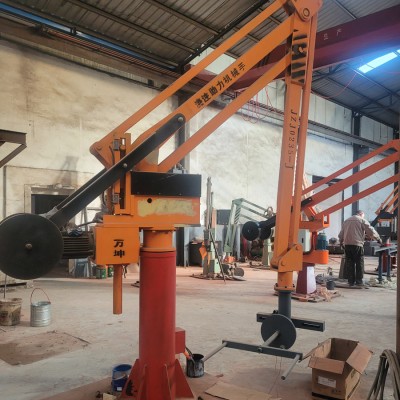
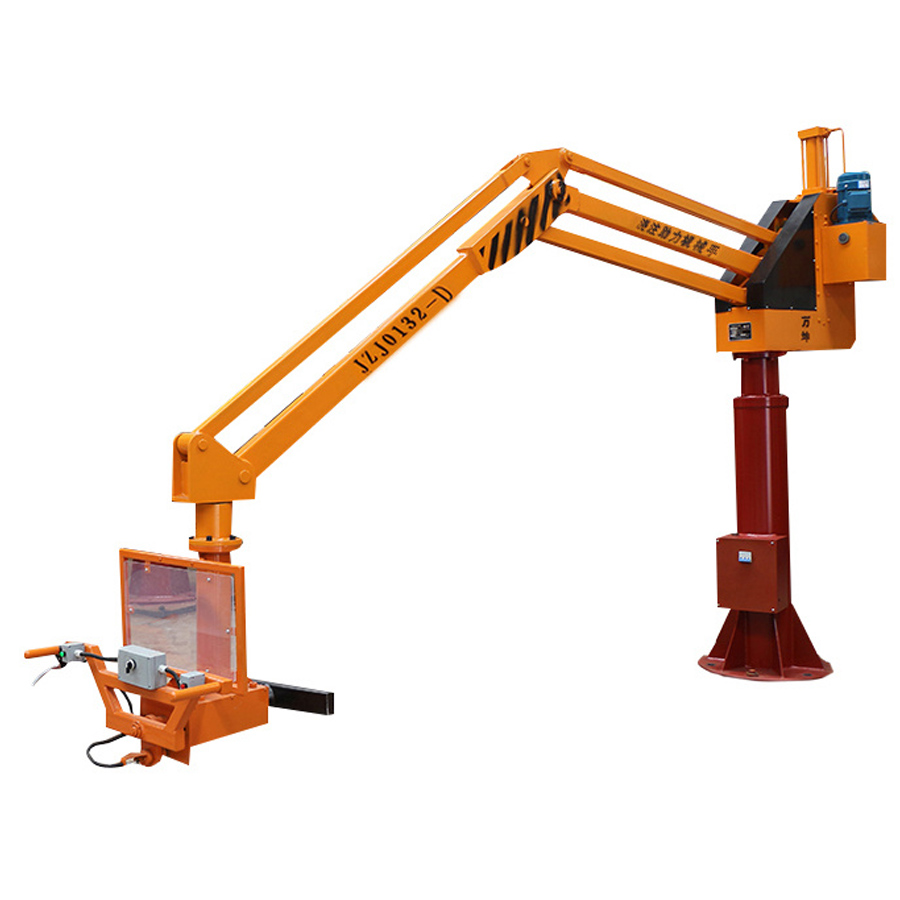
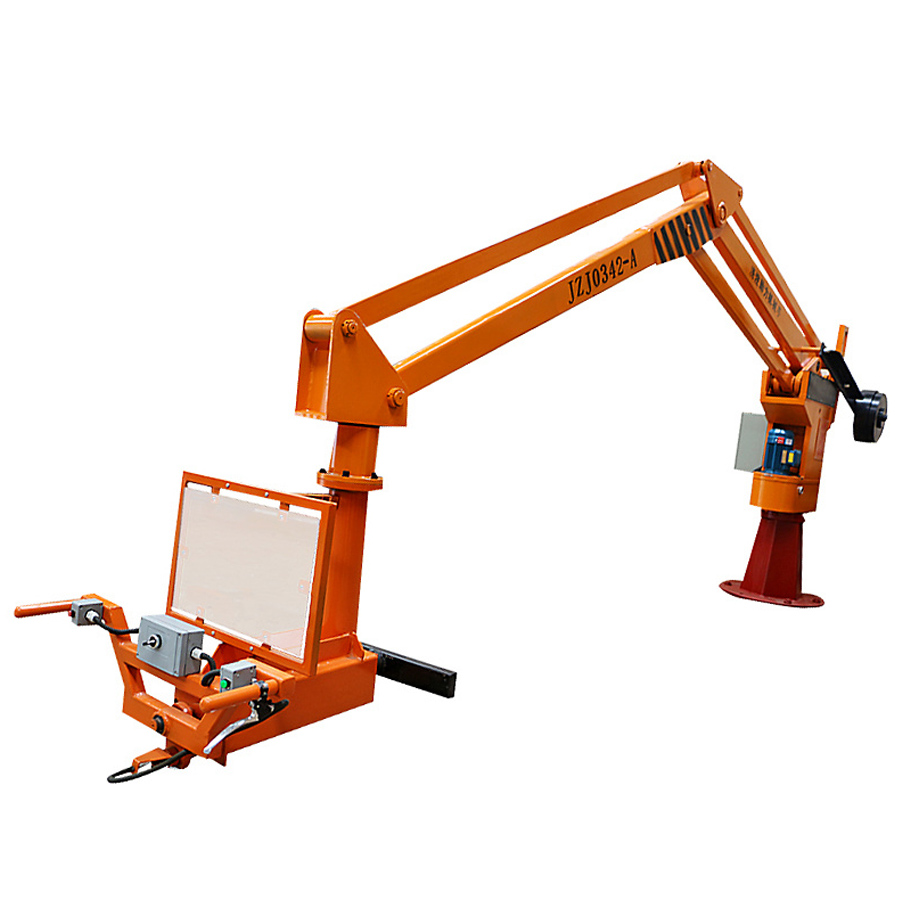
Mechanical Casting Manipulator takes mechanical transmission (such as gears, chains and lead screws) as the core power source, and realizes the precise control of grabbing, moving and placing actions through the cooperative operation of various mechanical components. Its structure is simple and compact, the transmission principle is intuitive, and there is no need for complex auxiliary systems. It is mainly designed for medium and light load casting scenarios, focusing on precision and stability, and can complete high-precision positioning and operation, which is very suitable for enterprises with high requirements on casting accuracy.
Hydraulic Casting Manipulator
Hydraulic Casting Manipulator uses hydraulic transmission (such as hydraulic cylinders, hydraulic pumps and hydraulic valves) as the power core, and transmits power through hydraulic oil to drive the manipulator to complete various actions. It has strong power output capacity, can easily cope with heavy load and large stroke operation requirements, and has the characteristics of stable operation and strong adaptability. It is mainly used in heavy load and complex working conditions casting scenarios,.
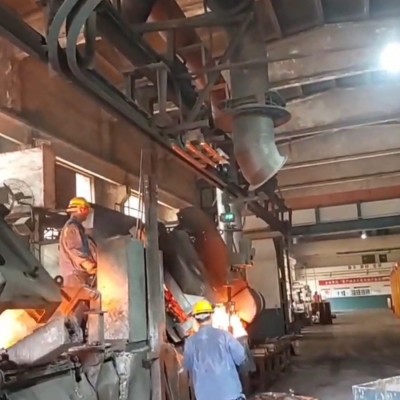
Although there are differences in structure and performance between Mechanical and Hydraulic Casting Manipulators, they have many common advantages. First of all, both can effectively replace manual labor, reduce labor costs, avoid safety risks in manual operation, and ensure the personal safety of operators. Secondly, both have high stability and durability, adopt high-quality materials and mature production technology, can adapt to the high-temperature and dusty environment of casting workshops, and have a long service life. Finally, both can be integrated with the existing production line of customers, without large-scale transformation of the production line, and can quickly put into use, helping customers recover investment costs in a short time.
Differences Between Mechanical and Hydraulic Casting Manipulators
In terms of structural comparison, the Mechanical Casting Manipulator has a simple structure, mainly composed of mechanical transmission system, grabbing mechanism, control system and frame. Its transmission components are exposed and easy to inspect and maintain. There is no need for strict sealing measures, and it is less affected by dust in the workshop, so it is not easy to have failure problems caused by dust accumulation. The Hydraulic Casting Manipulator has a relatively complex structure, including hydraulic transmission system, grabbing mechanism, control system and sealing device. It relies on hydraulic oil to transmit power, so it is necessary to do a good job in sealing protection to avoid oil leakage.
In terms of performance comparison, the two types of casting manipulators have their own advantages. In terms of load capacity, the Mechanical Casting Manipulator is suitable for medium and light loads, which can stably grab and pour molten metal within 500kg, and has high operation precision, with a positioning error of less than 0.5, which is very suitable for precision casting scenarios. The Hydraulic Casting Manipulator is good at heavy load operation, which can easily grab and pour molten metal above 500kg, and has strong power output, fast start-up speed, which can improve the efficiency of heavy-load molten metal pouring. In terms of energy consumption and noise, the Mechanical Casting Manipulator has low energy consumption, and the operation noise is controlled below 70 decibels, which is suitable for workshops with high environmental requirements. The Hydraulic Casting Manipulator has slightly higher energy consumption due to the need to drive the hydraulic system, and the operation noise is about 75 decibels, which can be optimized through noise reduction design.
In terms of applicable scenarios, the Mechanical Casting Manipulator is mainly suitable for precision casting, small and medium-sized casting production, low-dust workshops, and enterprises with high requirements on positioning accuracy and moderate budget, such as small precision casting factories and hardware casting processing plants. It can perfectly match the production needs of small and medium-sized precision casting pouring, and ensure the consistency and qualification rate of products. The Hydraulic Casting Manipulator is mainly suitable for sand casting, large-scale casting production, heavy-load molten metal pouring scenarios and complex working condition workshops, such as large-scale casting factories and heavy machinery casting production enterprises. It can effectively solve the pain points of difficult heavy-load molten metal pouring and improve the safety and efficiency of production lines.
Our Advantages
As a professional casting manipulator manufacturer, we have obvious advantages in product quality, customization capacity and after-sales service, which can provide customers with all-round support. In terms of product quality, we strictly control the selection of raw materials and production processes. Both Mechanical and Hydraulic Casting Manipulators adopt high-strength steel and high-quality components, and go through strict quality inspection before leaving the factory to ensure stable and reliable product performance in molten metal pouring. In terms of customization capacity, we have a professional R&D team, which can customize the structure, load capacity, stroke and control mode of the casting manipulator according to the customer's production line parameters, casting type and specific pouring needs, so as to ensure that the equipment perfectly fits the customer's production scenario. In terms of after-sales service, we provide one-on-one professional consultant docking, installation and commissioning guidance, operation training and regular maintenance services. No matter which type of casting manipulator the customer chooses, we can provide timely and professional technical support to ensure the smooth operation of the equipment in pouring work.
FAQ

01.Is there any difference in maintenance cost between the two types of casting manipulators?
02.Can both types of equipment be customized?
03.Which one is easier to operate?