how to choose a portable jib crane
Traditional fixed cranes require permanent installation, occupy large space and cannot be moved, making them unsuitable for small, temporary and frequently changed lifting tasks. For workshops, warehouses and construction sites needing flexible, cost-effective material handling, it is essential to choose suitable mobile lifting equipment.
What Is a Portable Jib Crane
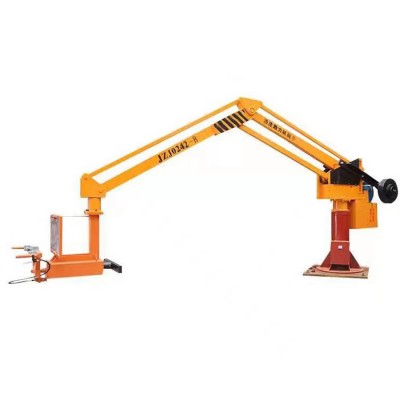
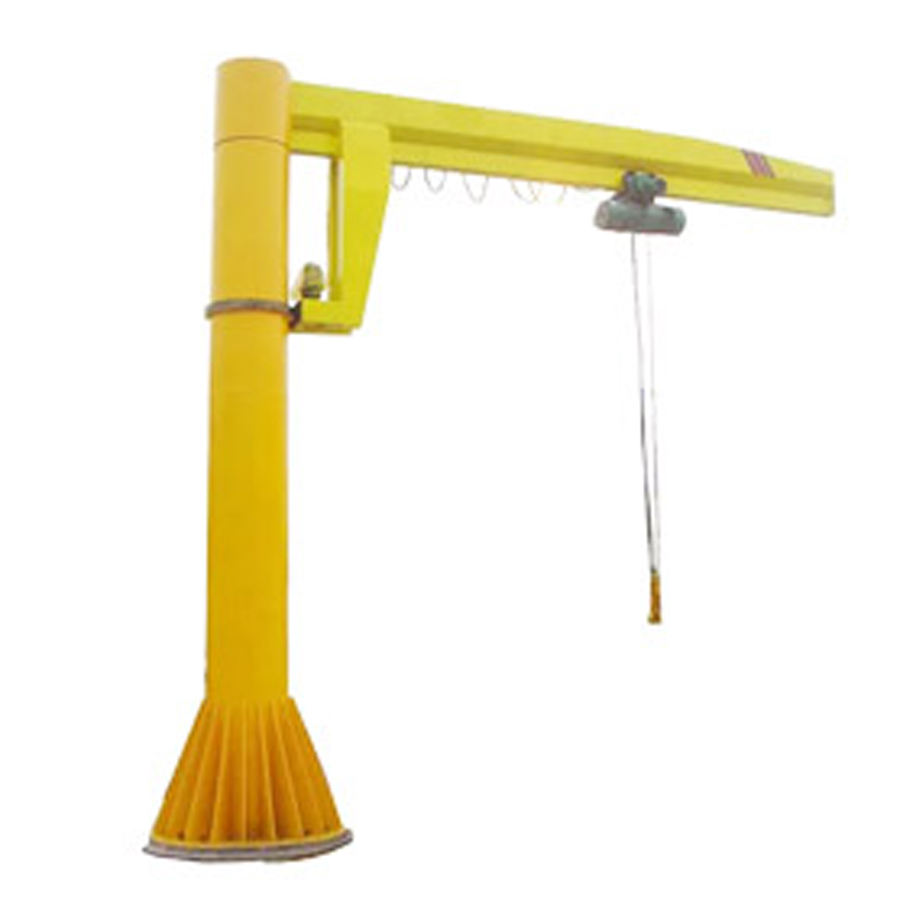
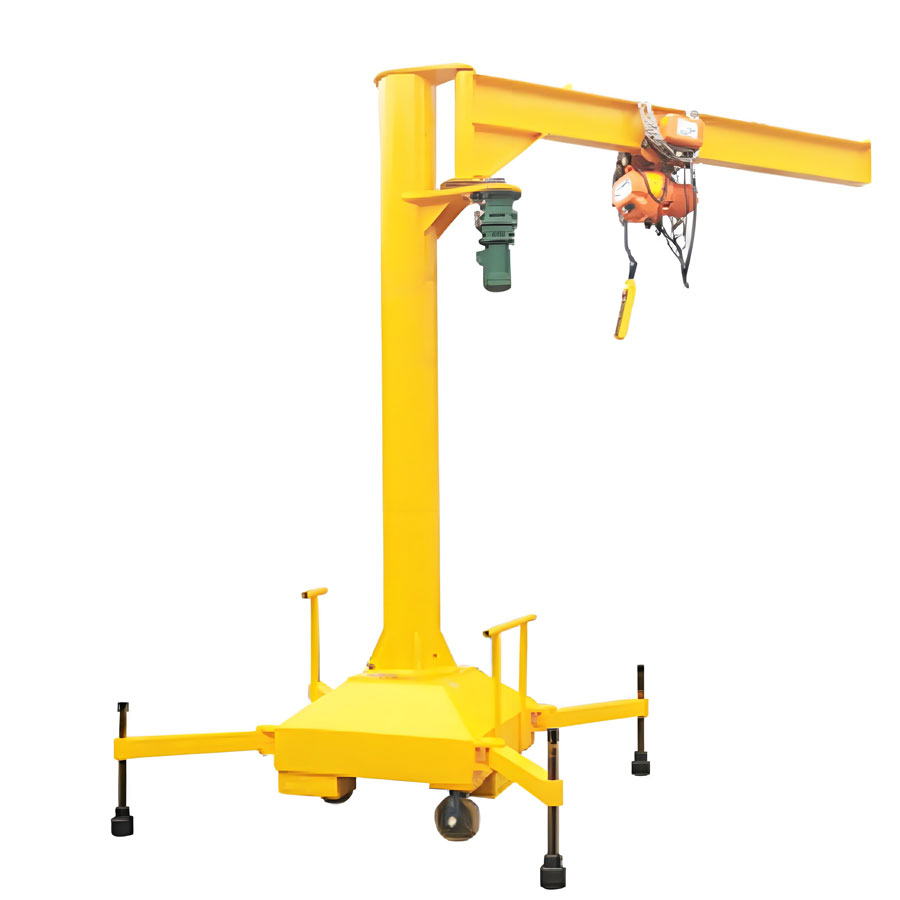
A portable jib crane is a movable, light-duty lifting device consisting of a steel jib, counterweight base, walking wheels and lifting assembly. It needs no fixed foundation or permanent installation and can be quickly moved and deployed across different work areas.
Its key advantages lie in high flexibility, small space occupancy and low overall cost. It fits narrow workspaces where large cranes cannot operate, adapts to frequent site changes, and serves as an economical alternative to bulky fixed lifting equipment for intermittent small-tonnage hoisting.
It is widely used for workshop material handling, warehouse loading and unloading, construction auxiliary hoisting, equipment maintenance, garage machinery lifting and outdoor temporary lifting work. It perfectly solves common industry pain points: limited space, frequent position adjustment demands and wasted performance of large fixed cranes for light tasks. It is one of the most practical mobile jib crane solutions for diversified on-site operations.
Selection Criteria
Rated Lifting Capacity
Load capacity determines operation safety. Always reserve a safety margin — the rated load should exceed the weight of daily maximum workpieces to avoid long-term full-load operation, structural fatigue and deformation risks.
Light-duty units handle tiny parts, while mainstream 1 ton jib crane and 2 ton jib crane suit most workshop, garage and warehouse daily tasks. Heavy-duty models apply to slightly heavier auxiliary hoisting. Select specifications based on regular working load instead of occasional extreme weight.
Lifting Height & Jib Reach
Lifting height refers to the vertical hook stroke. Users must reserve safe vertical clearance according to ceiling height and overhead obstacles to avoid collision and limit failure.
Jib reach is the horizontal working radius. A matched jib length ensures flexible material transfer without insufficient coverage or reduced structural stability, maximizing space utilization and working efficiency.
Mobility & Portability
Equipped with scenario-adaptive wheels: solid wear-resistant wheels for rough outdoor ground and silent brake universal wheels for indoor flat floors, all with locking functions to prevent sliding during lifting.
Most units adopt a detachable split structure for easy manual handling and transportation. Reasonable overall weight balances stability and flexibility, adapting to frequent site switching and various flat or slightly uneven grounds.
Power & Driving Mode
Manual type: No power supply required, low maintenance, ideal for low-frequency intermittent lifting and sporadic maintenance work.
Electric type: Automatic lifting and rotation, high efficiency, suitable for frequent indoor workshop and warehouse operations. Battery-powered type: Wireless design, free from wired limits, perfect for outdoor sites without stable power.
Rotation Angle & Working Flexibility
180° and 270° rotation designs fit narrow indoor and wall-side working areas with stable operation. 360° full rotation suits open warehouses and outdoor yards, realizing dead-angle-free all-round material handling.
Material & Structural Stability
Reliable jib crane manufacturers adopt high-strength integrated steel for jib beams to resist bending and torsion under long-term load. The low-center-of-gravity counterweight base effectively prevents tipping during eccentric operation.
Galvanized or spray-painted surface treatment provides excellent rust and wear resistance, adapting to dusty, humid and outdoor environments and extending equipment service life.
Safety Configuration
Qualified equipment is equipped with complete safety devices: overload protection, height limit stops, anti-slip hooks, wheel brakes and emergency stop switches.
These configurations automatically avoid overload failure, hook collision and sliding risks, standardized daily operation.
Scenario-Based Matching Selection Guide
Targeted selection according to working scenarios avoids functional redundancy or deficiency, balancing cost and efficiency.
Indoor Workshop & Maintenance
Choose 180°/270° compact models with medium load capacity. The low-noise and space-saving design adapts to narrow indoor spaces for assembly and maintenance work.
Warehouse Loading & Unloading
Select 360° rotating mobile jib crane with long jib reach and heavy-duty wheels to support high-frequency, wide-range cargo handling and improve turnover efficiency.
Outdoor Construction & Temporary Work
Prefer battery-powered or manual units with anti-rust treatment and reinforced bases to adapt to complex outdoor environments and unstable power conditions.
Garage & Small Machinery Lifting
Adopt lightweight detachable models for easy storage and transfer, meeting intermittent small-load tasks such as vehicle part replacement.
Common Buying Mistakes & Avoidance Tips
Most equipment usage problems result from improper purchasing decisions. Avoid these typical traps for cost-effective selection.
Do not prioritize low prices solely. Low-cost products usually use thin steel and simplified structures, causing deformation, instability and potential safety hazards, plus higher long-term maintenance costs.
Reserve sufficient load safety margins. Purchasing units matching exact working weight leads to long-term full-load operation, accelerating aging and increasing failure risks.
Check on-site conditions in advance, including floor bearing capacity, ceiling height and walking space, to avoid unmatchable equipment size and usage obstacles.
Select reasonable power modes: avoid wired electric models for powerless outdoor sites and manual models for high-frequency indoor work.
Value after-sales service and accessory compatibility. Complete after-sales support ensures timely maintenance and replacement of wearing parts, avoiding delayed work progress.
FAQ
Can the jib length and lifting height be customized?
Professional manufacturers support non-standard customization of jib length, lifting height and working radius according to on-site measurement data and personalized demands, adapting to special scenarios that standard models cannot fit.
Is after-sales maintenance support provided?
Formal suppliers provide full after-sales services including installation guidance, technical training, regular maintenance and standard wearing parts supply, ensuring long-term stable equipment operation.