Casting Manipulator Equipped with High-Precision Screw Rods
Precision screw rods are the core precision components of the Casting Manipulator for achieving precise linear motion transmission and stable force transfer under heavy loads. They are mainly applied to the telescopic arms, lifting columns, and posture adjustment joints of the foundry manipulator in key motion areas. In harsh working conditions such as high temperatures, dust, heavy loads, and frequent start-stop operations in casting, they directly determine the positioning accuracy, motion smoothness, and service life of Pouring Machines. They are the core precision transmission units that distinguish them from ordinary mechanical hands.
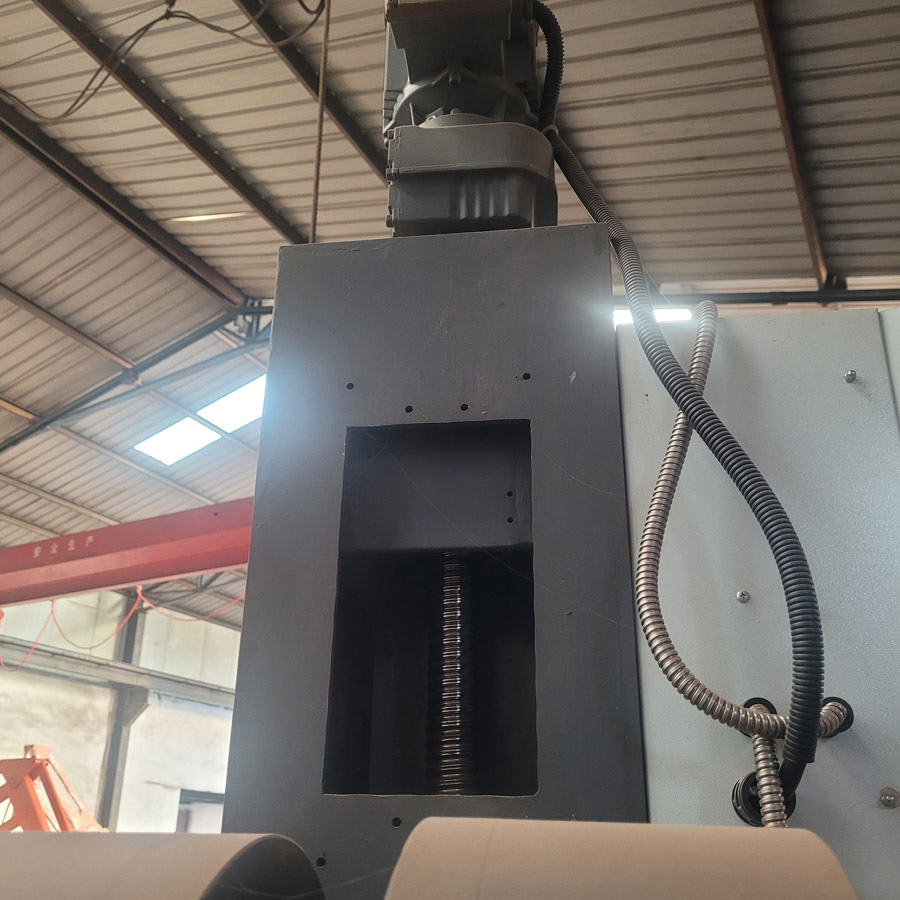
Role and Function of the Precision Screw Rod
The precision screw of the Casting Manipulator needs to meet the specific requirements of the casting process and also fulfill the basic performance of industrial precise transmission.
Core application parts
Lifting column: Achieve precise vertical lifting, bearing the heavy load of the end fixture + steel ladle;
Extension and retraction of large arm / small arm: Complete the horizontal extension and retraction actions of the mechanical hand, ensuring the precise position of steel ladle pouring and transportation;
Posture adjustment joint: Assist in achieving the slight angle / position adjustment of the fixture, adapting to the precise alignment during pouring;
Clamping arm drive: Some heavy-duty clamping arms use screw transmission to achieve stable clamping / release of the steel water ladle.
Core function
Rotary motion to linear motion: Convert the rotational power of the servo motor / hydraulic motor into linear displacement at the end of the Industrial Manipulator, with high transmission efficiency;
High-precision positioning: Combined with the servo system, achieve precise positioning within ±0.1 to 0.5mm, meeting the position requirements for equipment pouring and transportation;
Heavy-load force transmission: Can withstand axial heavy loads and maintain smooth transmission without obvious wobbling;
Self-locking / Anti-falling: Some screw rod types (such as trapezoidal screw rods) have mechanical self-locking characteristics, preventing the end from falling due to gravity when power is lost / in case of failure, enhancing equipment safety;
Smooth speed regulation: Supports stepless speed regulation with low-speed high-torque and high-speed low-torque, suitable for different motion rhythms in the casting process.
Key Advantages for Casting
| Advantage | Explanation & Benefit for Casting |
|---|---|
| High Positioning Accuracy & Repeatability | Precision screw rods offer micron-level positioning accuracy. This ensures the ladle's spout is positioned perfectly and consistently over the mold's pouring cup every time, which is fundamental for preventing spills and ensuring quality. |
| High Mechanical Efficiency | They have very low friction (typically >90% efficiency), meaning most of the motor's power is converted into useful motion. This allows the use of smaller, more responsive servo motors, reduces energy consumption, and minimizes heat generation. |
| High Rigidity & Load Capacity | The design provides excellent resistance to axial loads, ensuring the manipulator arm remains stable under the heavy weight of the full ladle, with minimal deflection or backlash. This is crucial for stable, vibration-free pouring. |
| Predictable Lifespan & Reliability | Their lifespan can be accurately calculated based on load and speed. When properly selected and maintained, they offer extremely reliable performance over long periods, which is vital for continuous foundry production. |
| Smooth and Controlled Motion | Enablesverysmoothaccelerationanddecelerationprofiles.Thisiscriticalforpreventingmoltenmetalsloshingintheladleduringstart/stopmovements,enhancingbothsafetyandprocessstability. |
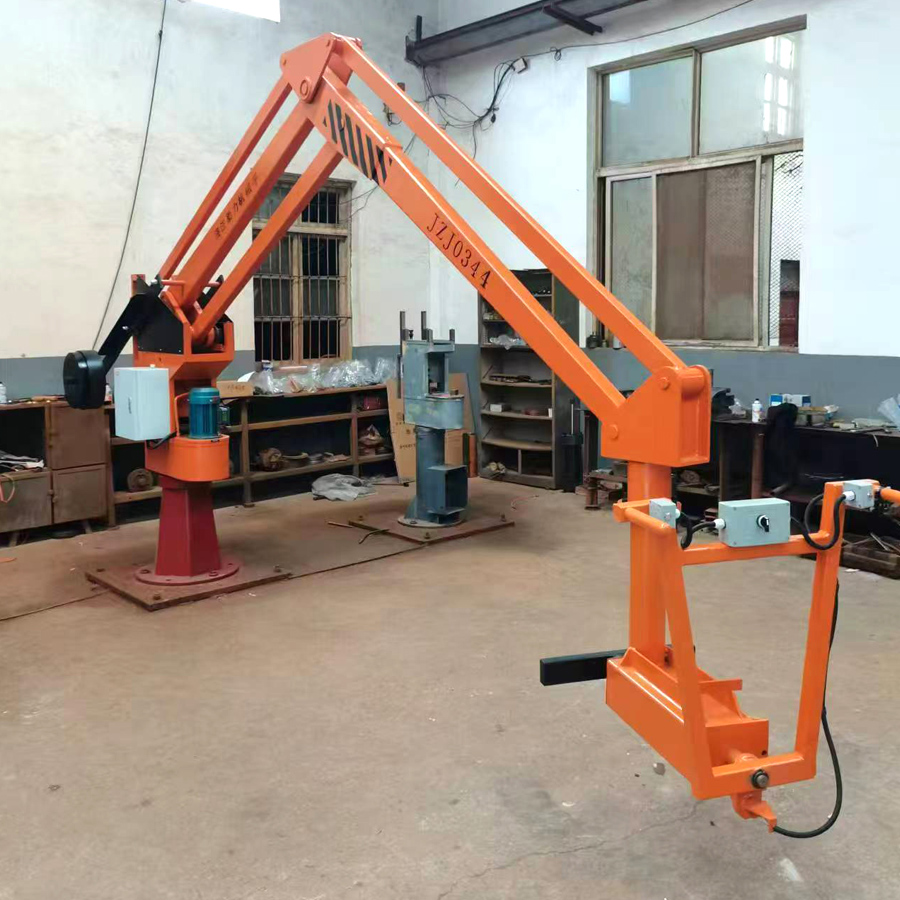
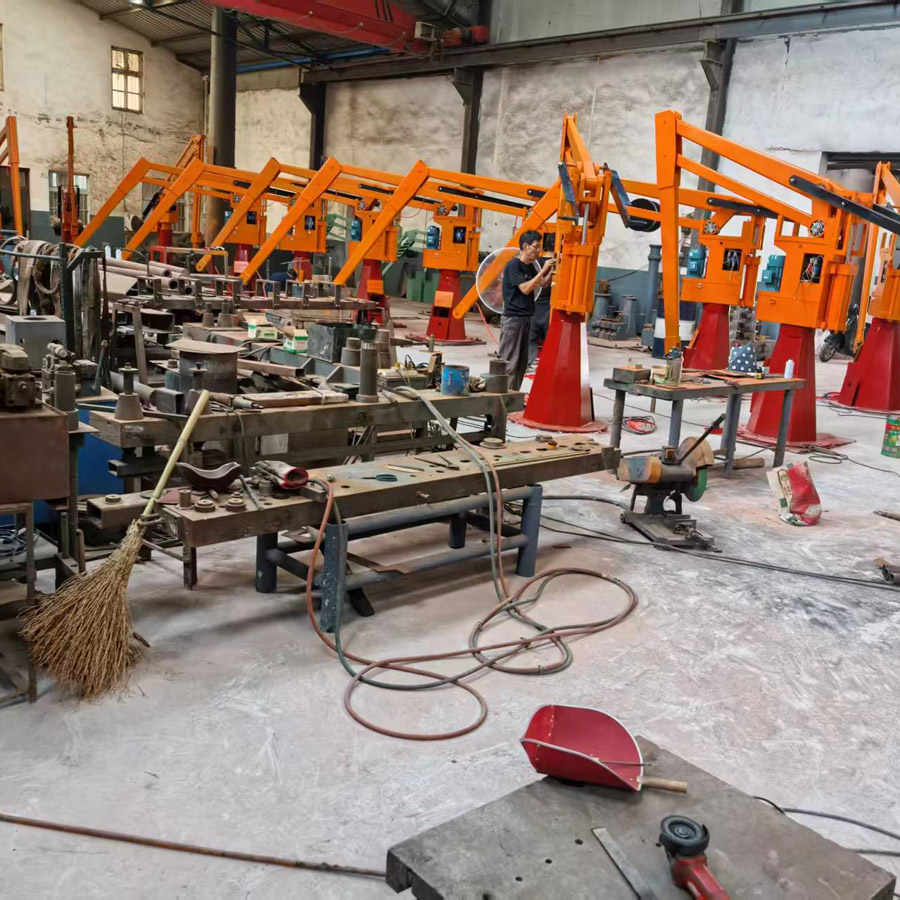
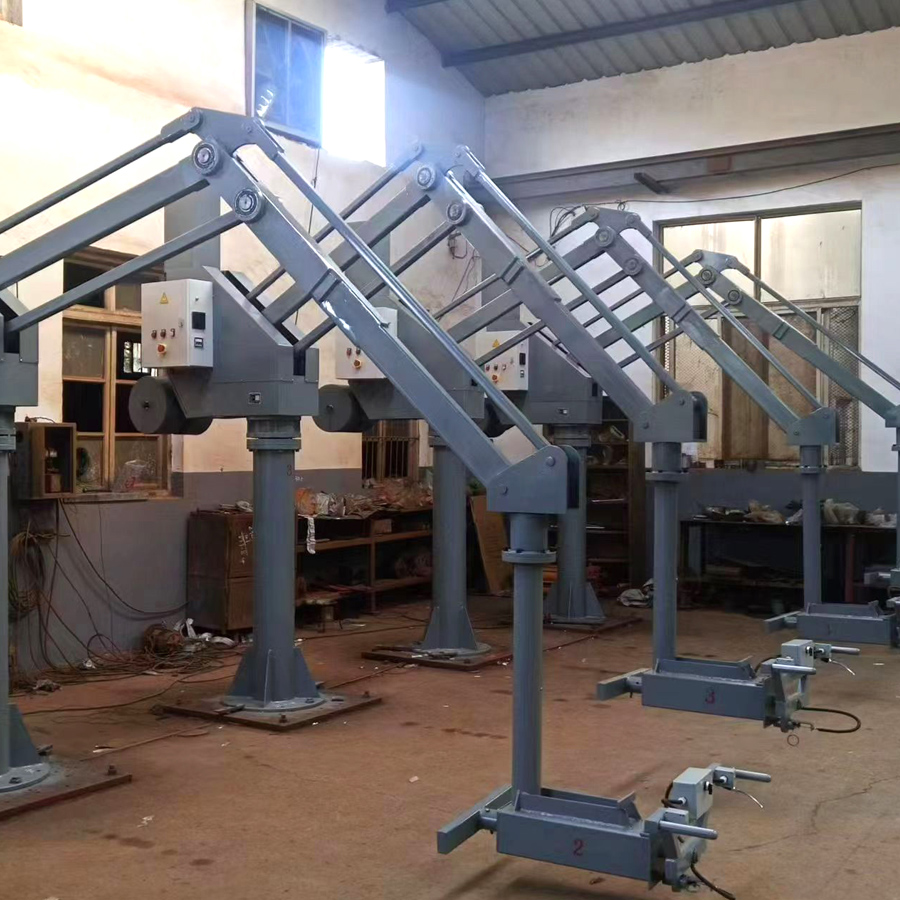
Our Products
Critical Considerations & Challenges in Foundry Use
The harsh foundry environment presents specific challenges that must be addressed in the design and maintenance of the screw rod system.
| Challenge | Mitigation Strategy / Design Feature |
|---|---|
| Contamination (Metal Dust, Sand, Slag) | Essential: The standard configuration includes a multi-layer sealing structure. The telescopic guard uses high-temperature-resistant metal corrugated pipes or wear-resistant three-proof fabric to prevent iron water particles and dust from entering the screw rod raceway. |
| Thermal Effects | 1. Material Choice: Use screws made from materials with low thermal expansion coefficients. 2. Design: Incorporate pre-tension (pre-stretch) to compensate for thermal growth under expected temperature ranges. 3. Cooling: For critical high-precision axes, consider active cooling for the nut or motor assembly. |
| High Axial Loads | The screw rod and its supports (angular contact bearings) must be oversized with a significant safety factor to handle the dynamic loads of accelerating/decelerating the ladle's full weight. |
| Corrosion resistance | The casting workshop has corrosive media such as cooling water and demolding agents.The surface of the screw rod is treated with hard anodizing,chrome plating (hardchrome),or nitriding to enhance its corrosion resistance and wear resistance. |