Casting Manipulator balances the function of the counterweight block
The balance counterweight block is a core component for the Casting Manipulator to achieve static torque balance, reduce driving energy consumption, enhance motion smoothness and operational safety, and is especially indispensable in heavy-load, high-temperature, and frequently start-stop casting conditions. In Pouring Manipulator, the counterweight block plays a crucial role, and its design and position vary depending on the type of manipulator.
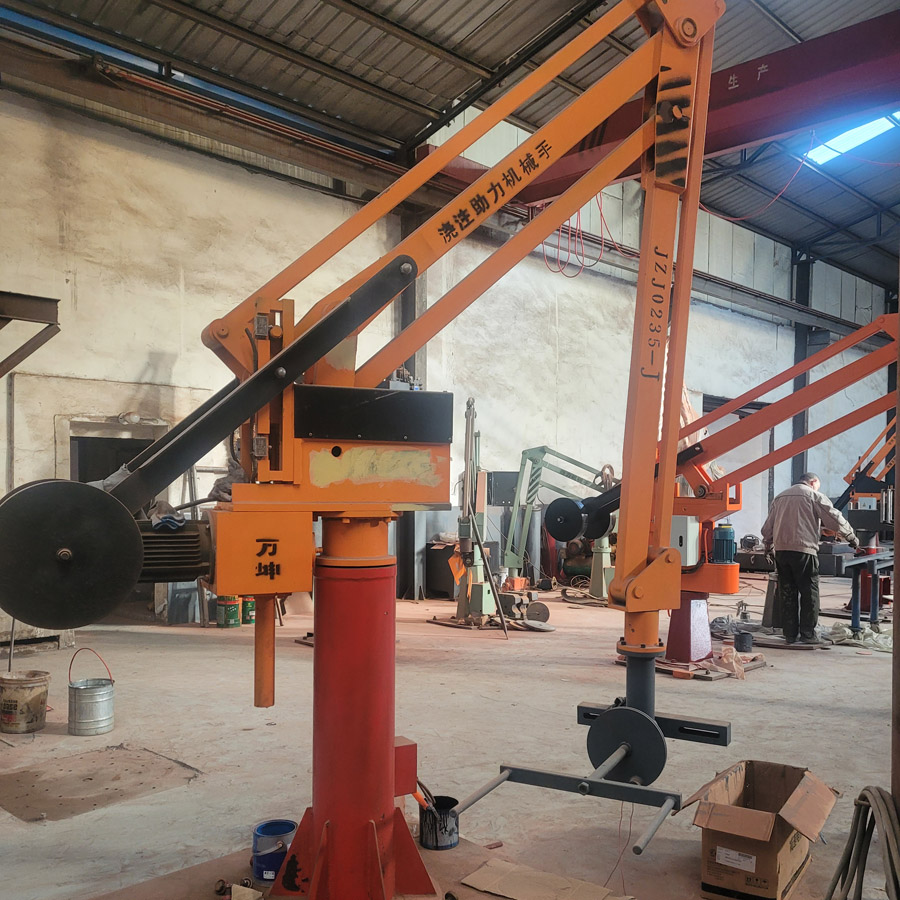
Core function
Labor-saving
Offsets the heavy torque of the mechanical arm, end fixture and workpiece, reducing the load and energy consumption of servo/hydraulic drive.
Precision
Suppress the impact and vibration during high-speed start-stop and attitude changes, and improve positioning accuracy;
Safety
Reduce the burden on the braking system and provide passive safety support in the event of power failure or malfunction.
types of Balance counterweight block
Equipment balance counterweight
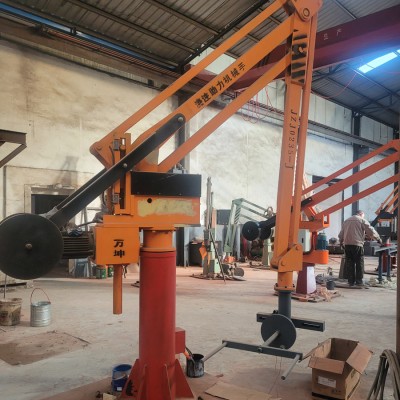
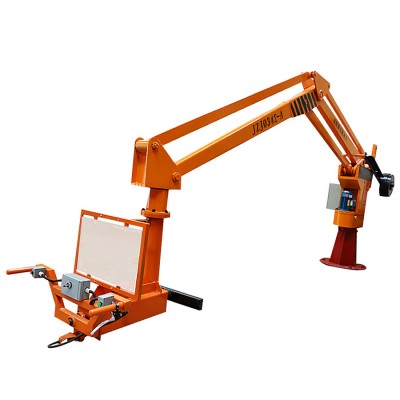
This type of counterweight is mainly used to balance the main structure of cranes or column-type manipulators.
Balancing overturning moment: When the mechanical hand is fully extended and the front end of the arm bears the maximum weight of the ladle and molten iron, a huge overturning moment will be generated. The counterweight block is installed at the rear end of the arm, generating a reverse torque to prevent the entire device from toppling forward.
Reduce the load on the drive motor: By optimizing the counterweight, the robotic arm can approach a "static balance" state at all positions. This means that the drive motor only needs to overcome friction and a small portion of unbalanced force to move the arm, rather than lifting the entire load, thereby significantly reducing motor power and energy consumption, making the movement smoother and control more precise.
Enhancing stability and safety: It is a core structural component that ensures the stability of the equipment foundation and no shaking during operation.
Balance counterweight of the ladle
This type of counterweight is part of the ladle assembly and is mainly used for zero-gravity lifting.
Purpose and Function:
Achieving a "zero gravity" or "weightless" state: This is its core function. The counterweight blocks precisely balance the self-weight of the empty ladle through the lever principle (or in combination with a pneumatic/spring system).
Ultimate labor-saving and precise control: Once the empty ladle is balanced, the operator only needs to apply a very small force (only used to overcome the frictional force of the system) to easily lift, lower or position the ladle (whether it contains molten iron or not) at any position in three-dimensional space. The weight of molten iron is borne by an independent lifting system (such as a cylinder).
Ergonomics and safety: It completely eliminates the burden on operators to lift heavy objects and allows for extremely precise assembly or pouring operations.
Maintenance
Regular inspection
The tightness of bolts/welds, surface wear and cracks, to prevent loosening or fracture;
Balance check
After changing the fixture or workpiece specification, recheck and adjust the counterweight.
Safety measures
Install limit devices and fall protection to prevent accidents caused by the detachment of counterweights.
High-temperature protection
Stay away from high-temperature areas or take insulation measures to prevent the decline of material performance.