Overhead Rail Mounted casting manipulator- Increasing Foundry Efficiency
Overhead Rail Mounted casting manipulator, which combines the functions of the rail system and the robotic arm, is a key device in the automated pouring process of the foundry workshop. It is mainly used for the pouring of molten metals and solves the problems of precise transportation and quantitative pouring of high-temperature molten metals. Suspended on the Rail, it can move horizontally along the rail while carrying out pouring operations. It is a precise system integrating motion control, temperature management, safety protection and process automation.
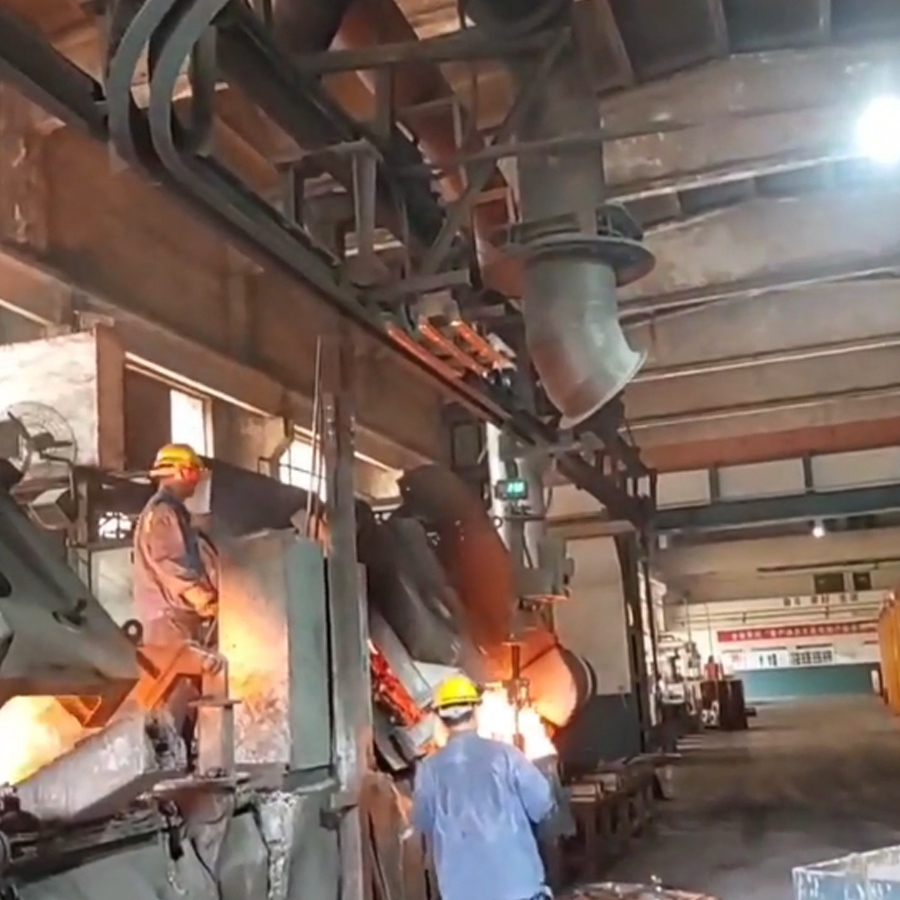
Main components
rail
High-strength double beams or box beams are fixed on overhead supports or workshop beams, usually covering the path from the smelting furnace → waiting/weighing position → multiple pouring stations → residue dumping position. The layout can be linear, circular or matrix network type, and can be designed as single-track or double-track. Ensure the smooth operation of the manipulator and be capable of withstanding the weight of the manipulator and molten metal.
Mobile trolley
A driving mechanism that moves longitudinally on the guide rail, carrying the entire pouring manipulator.
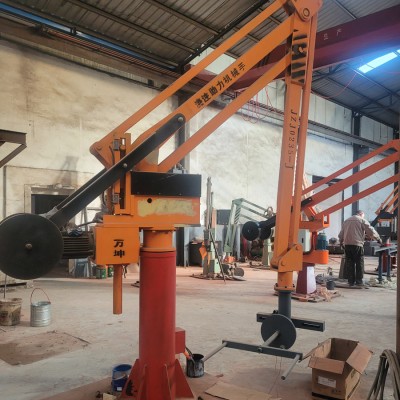
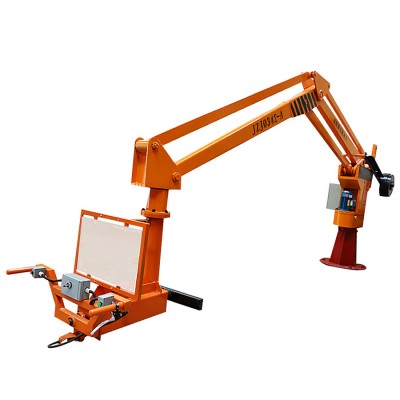
Casting manipulator
The most crucial mechanism mimics the function of a human arm and achieves complex movements through joints and actuators, typically including degrees of freedom such as rotation, extension, and lifting. It is used to adjust the stability and height of the ladle to align with molds of different heights, and can be quickly replaced to meet the requirements of different castings. Steel ladles are made of heat-resistant materials and usually have a capacity of 200 to 300 kilograms.
Control system
PLC or computer control to handle motion logic. The touch screen is used to set the pouring parameters (target weight, pouring speed, position point, etc.). The manual control terminal is used for equipment debugging, maintenance and emergency manual operation.
Safety and Auxiliary systems
The tilting mechanism must be equipped with mechanical self-locking and electrical braking to prevent accidental overturning. In the event of a sudden power outage, the ladle can be returned to a safe position through a backup power supply or a manual pump. Splash shield/heat insulation board: Protects mechanical components from high-temperature radiation and metal splashes.
Our Products
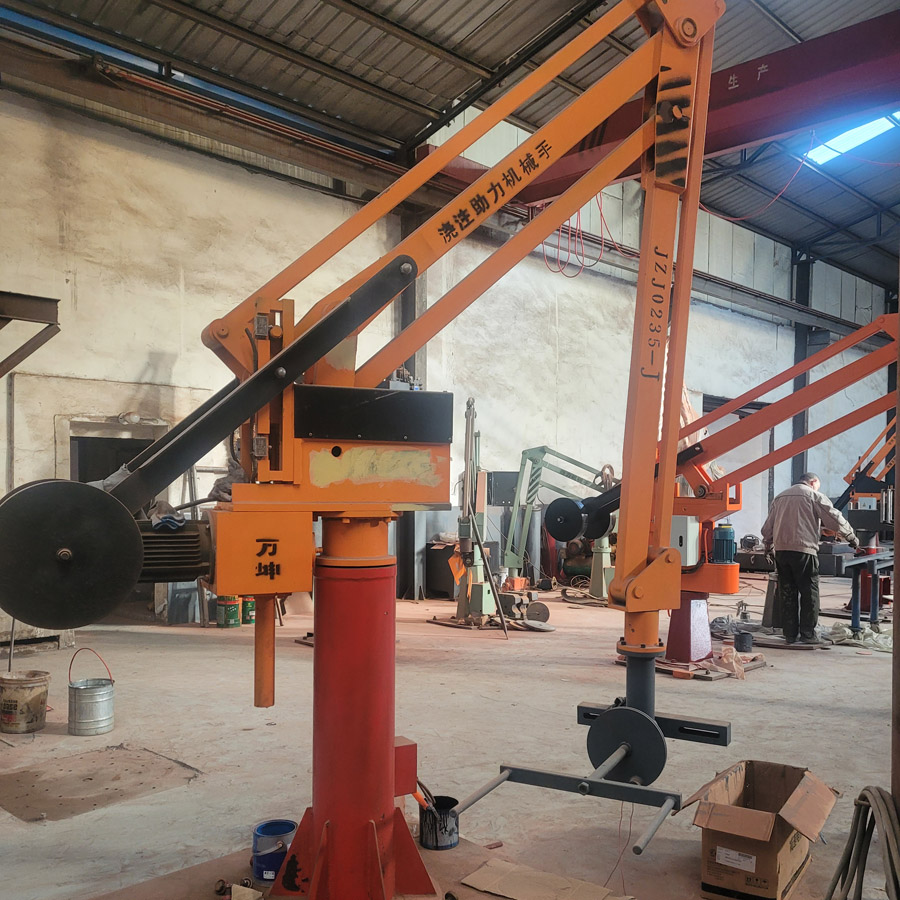

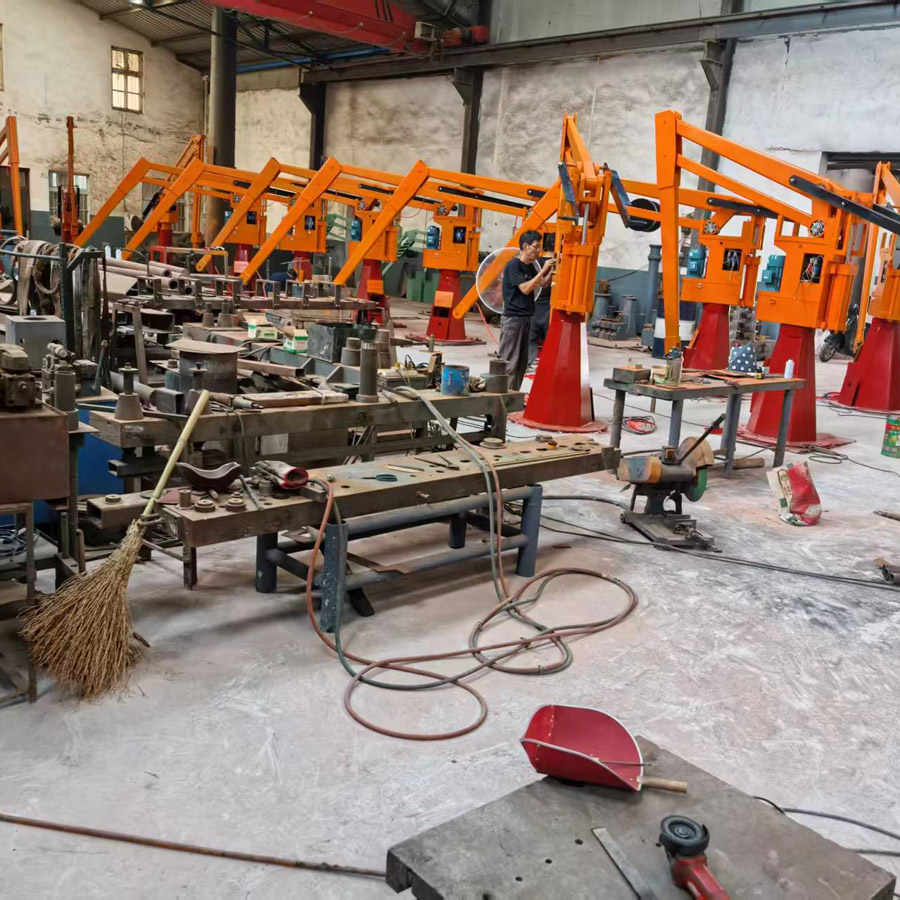
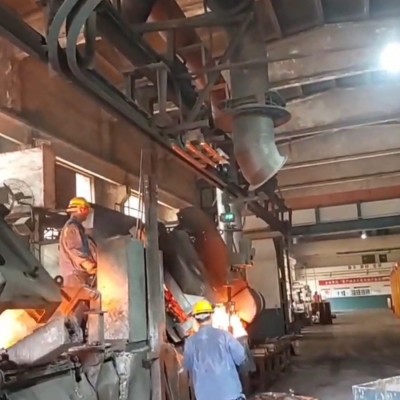
Drive the walking mechanism to move the casting manipulator along the elevated rail to the position above the molten metal storage area. The lifting mechanism lowers the ladle to fill the molten metal. After that, the mechanical hand moves to the pouring position above the mold. The rotating mechanism adjusts the pouring Angle and pours the molten metal into the mold. During the pouring process, parameters such as pouring speed and pouring Angle can be monitored and adjusted in real time to ensure the pouring quality.
Advantages
Consistent quality
Smooth operation and stable casting, greatly reducing defects such as underfilling, porosity and slag inclusion caused by fluctuations.
Ensure safety
Assist human workers in completing operations in high-temperature environments and reduce the risk of accidents.
Reduce production costs
After a one-time investment, it can reduce the waste of molten metal, lower the scrap rate and recover the cost.
Flexibility and scalability
It can be integrated into the existing production line, and tracks can be laid to expand the working range of the manipulator, meeting the demands of multi-variety and batch production.
Overhead Rail casting manipulator resolves the dangerous and difficult-to-stably control processes in casting production, with the circular track fixed on the workshop roof. The walking device is connected to the track through multiple wheels and is driven to move by a drive motor. Youdaoplaceholder0 equipment is equipped with a multi-arm execution part, which can perform operations such as grasping, moving and Pouring, solving the problems of low efficiency and poor quality of castings. It is applied to various casting production lines, such as gray cast iron casting, ductile iron casting, non-ferrous metal casting, etc. It is suitable for casting molds of different sizes and shapes and can be applied to the production of various castings, such as automotive parts, machine tool parts, agricultural machinery parts, etc.